
Which Month is the Coldest in Hong Kong? A Deep Dive into the City’s Winter Chill
Hong Kong, a bustling subtropical metropolis, is famous for its hot, humid summers and vibrant urban energy. But when winter arrives, the city reveals a surprisingly cooler and more refreshing side. While never truly freezing like many parts of the world, Hong Kong does experience a distinct cold season — and January stands out as the coldest month of the year.
Understanding Hong Kong’s Climate Basics
Hong Kong has a humid subtropical climate with four seasons. Summers (May–September) bring sweltering heat and heavy rain, while winter (December–February) offers mild, dry, and comfortable conditions with occasional chilly spells.
The Hong Kong Observatory (the city’s official weather authority) records long-term averages showing clear patterns:
- Average temperatures drop gradually from November onward
- The lowest readings occur in the heart of winter
- By February, things start warming up again
Reliable climate data from multiple sources consistently point to January having the lowest average temperatures.
Here are typical monthly averages (based on long-term normals, usually 1991–2020 or similar periods):
- December: ~18–20°C daytime highs, ~14–16°C lows
- January: ~18–20°C daytime highs, ~14–15°C lows (coldest average)
- February: ~19–21°C daytime highs, ~15–16°C lows
January edges out as the coldest, with the lowest mean temperature, mean minimum temperature, and most frequent chilly nights.
These images capture the essence of Hong Kong’s winter — cool enough for coats and scarves, yet far from arctic:
What Makes January Feel Especially Chilly?
Even though daytime highs often hover around 20°C (68°F), several factors amplify the “cold” sensation:
- Nighttime & early morning lows frequently dip to 10–14°C (50–57°F)
- Strong winter monsoon winds from the north bring cooler, drier air
- High humidity (often 70–80%) makes temperatures feel colder
- Occasional cold snaps can push mercury down to single digits (especially in the New Territories or on higher ground)
In rare extreme cases, Hong Kong has seen temperatures near 0°C on hilltops like Tai Mo Shan, with frost forming — a sight that always makes headlines in this subtropical city!
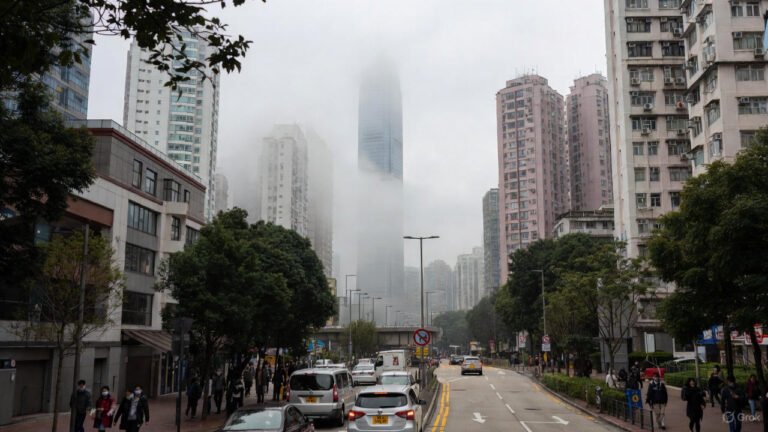
Foggy mornings are also common in January, creating moody, atmospheric scenes over the famous skyline:
How Cold Does It Really Get? Real-World Perspective
For locals used to 30–35°C summers, 14°C feels genuinely cold! You’ll see puffer jackets, scarves, beanies, and even gloves on the streets. Heating is rare in homes and buildings (no central heating culture), so indoor spaces can feel chilly too.
On the coldest days, temperatures in urban areas might drop to 8–12°C, while higher elevations experience near-freezing conditions and occasional frost:
Why January Wins the “Coldest Month” Title
While December sometimes feels crisp and February can have occasional cold fronts, January has the statistical edge:
- Lowest average monthly temperature
- Highest chance of the season’s lowest temperatures
- Most frequent cold weather warnings
Even in recent years (including trends up to 2025), January remains the benchmark for Hong Kong’s chilliest period.
Final Takeaway
If you’re visiting Hong Kong and want the coolest weather, pack for January — think light-to-medium jackets, long sleeves, and perhaps a scarf. It’s the perfect time to enjoy the city without summer’s humidity, with crisp air, fewer crowds, and stunning (sometimes foggy) views of the harbor and skyscrapers.
Just remember in Hong Kong, “cold” is relative — what feels freezing to locals might feel pleasantly cool to visitors from colder climates! ❄️🏙️
